Scrap is a strategic resource
Scrap is a strategic resource
by Anastasia Kelesiadou, Public Affairs and Sustainability Officer
 The European Commission’s recently unveiled Steel & Metals Action Plan (SMAP) has placed steel scrap at the heart of its industrial strategy. For packaging-steel stakeholders, this debate has supply-chain and policy implications.
Under SMAP, the Commission is considering trade measures on scrap, including possible export fees or duties. These measures aim to ensure enough scrap remains available within the EU to fuel a circular, low-carbon steel industry.
For all steel sectors, including packaging steel, high-quality scrap is a critical input. Because steel scrap is necessary for the manufacture of new steel, the large volumes of steel produced in Europe every year are already made with large amounts of scrap steel. Indeed, we calculate that the current recycled content of steel packaging in Europe is 67%. Additionally, some European steel industry players have chosen to shift towards intensive scrap-using electric-arc furnace (EAF) capacity as part of their net zero strategy. Indeed, each tonne of recycled steel saves 1,5 tonnes of C02 emissions.
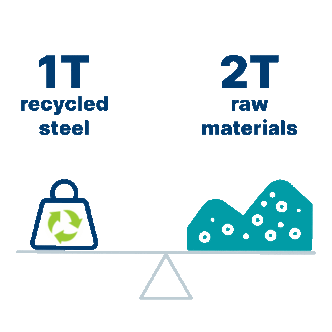
A stable scrap market supports not only circularity but also resilience: long-term access to recycled steel scrap reduces dependence on primary resources and saves energy. Each tonne of steel recycled currently saves over twice its weight in raw materials and uses 70% less energy.
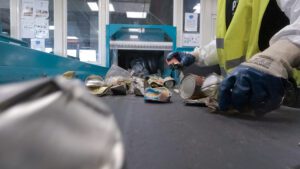
And packaging scrap plays a key role in this. Contrary to other steel products, it enters the scrap pool quickly and repeatedly, providing a stable source of recycling feedstock.
The announcement that 82% of steel packaging placed on the market was ‘really recycled’ in 2023 confirms that steel packaging remains the most widely recycled packaging material in Europe. This record rate reinforces the vital role of steel scrap, which is essential for the sustainable production of new steel products by reducing energy consumption and emissions in the manufacturing process.
Whilst the goal must be to keep scrap in Europe to support low-carbon steel, trade restrictions must not weaken the ecosystem that underpins circular supply. Policymakers have a tricky balance to strike - to incentivise domestic use of scrap without undermining the global markets that currently sustain the recycling industry.