Embedding Permanent Materials in Europe’s circular economy
Embedding Permanent Materials in Europe’s circular economy
by Metka Cavka Luciani, Head of EU Affairs, Steel for Packaging Europe
A truly circular economy should value materials that can remain in continuous use without losing their intrinsic properties. That principle is increasingly finding its place in European policy.
The adoption of the Packaging and Packaging Waste Regulation (PPWR), last 12th August 2026, is a significant policy milestone. While much of the public debate has focused on packaging reduction and recycling targets, the regulation also recognises a more fundamental concept: that the quality of recycling matters just as much as the quantity.
For Steel for Packaging Europe (SfPE), this represents years of consistent engagement with policymakers, industry partners and technical experts.
Steel packaging has always demonstrated what genuine circularity looks like. Recycled again and again without loss of its inherent properties, steel remains a permanent material, capable of returning to new steel packaging or being transformed into countless other steel products through an established closed material loop.
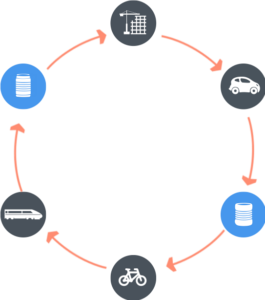 This circularity is supported by both high recycling rates and an extensive recycling infrastructure across Europe. Once collected and sorted, steel packaging scrap can be sent to a nearby steel plant and used as a valuable raw material in the production of new steel products, regardless of their final application. With more than 200 steel plants across Europe, compared with only a small number dedicated specifically to packaging steel, it makes both economic and environmental sense to recycle the material close to where it is recovered rather than transport it long distances to produce the same packaging application.
Crucially, the material itself does not degrade. Its quality and inherent properties are preserved through successive recycling cycles, allowing steel to retain its value and remain in circulation indefinitely.
The PPWR's new recyclability performance grades and design-for-recycling criteria are an important step forward. By placing greater emphasis on packaging that can be effectively collected, sorted and recycled into valuable new products, they lay the foundations for recognising materials that can maintain their value and performance through multiple recycling cycles, rather than being recycled only once or a limited number of times.
Beyond the legislation itself, momentum is also building around the concept of high-quality recycling. Across European institutions, there is growing recognition that recycling should preserve material value wherever possible, encouraging closed-loop systems, both material and product, that keep resources in productive use for generations rather than allowing them to be progressively downcycled.
Another important achievement has been the growing recognition that policy must avoid unintended material substitution. During negotiations on the PPWR, EU Member States acknowledged that sustainability legislation should not inadvertently encourage a move away from highly circular materials towards packaging that is more difficult to recycle or cannot remain in continuous material loops. This marks an important shift towards rewarding genuine circular performance.
 None of this progress has been achieved in isolation. After a first launch of the Permanent Materials concept in 2012, steered by Joris Nachtergaele (read about Joris here) alongside Metal Packaging Europe and European Aluminium, Steel for Packaging Europe helped build the Permanent Materials Alliance (PMA) with those same partners and the European Container Glass Association, FEVE. Together, these organisations have demonstrated that permanent materials share common strengths and deserve common recognition within Europe's circular economy framework. Securing a supportive opinion from the European Economic and Social Committee (EESC) further reinforced the concept within the EU's institutional landscape.
However, celebrating achievements also means looking ahead.
The Circular Economy Act, foreseen for October 2026, presents the next major opportunity to strengthen Europe's approach by defining high-quality recycling more clearly and ensuring that Extended Producer Responsibility (EPR) systems reward materials that deliver genuine circularity.
At the same time, implementation of the PPWR and the Ecodesign for Sustainable Products Regulation (ESPR) over the coming two years will determine how these ambitions become reality through delegated acts, lifecycle assessment methodologies and technical criteria.
Forty years ago, Steel for Packaging Europe was founded to give the industry a collective voice. Today, that voice is helping shape a policy framework that increasingly recognises a simple but powerful idea: in a truly circular economy, the best materials are those that can keep coming back.